
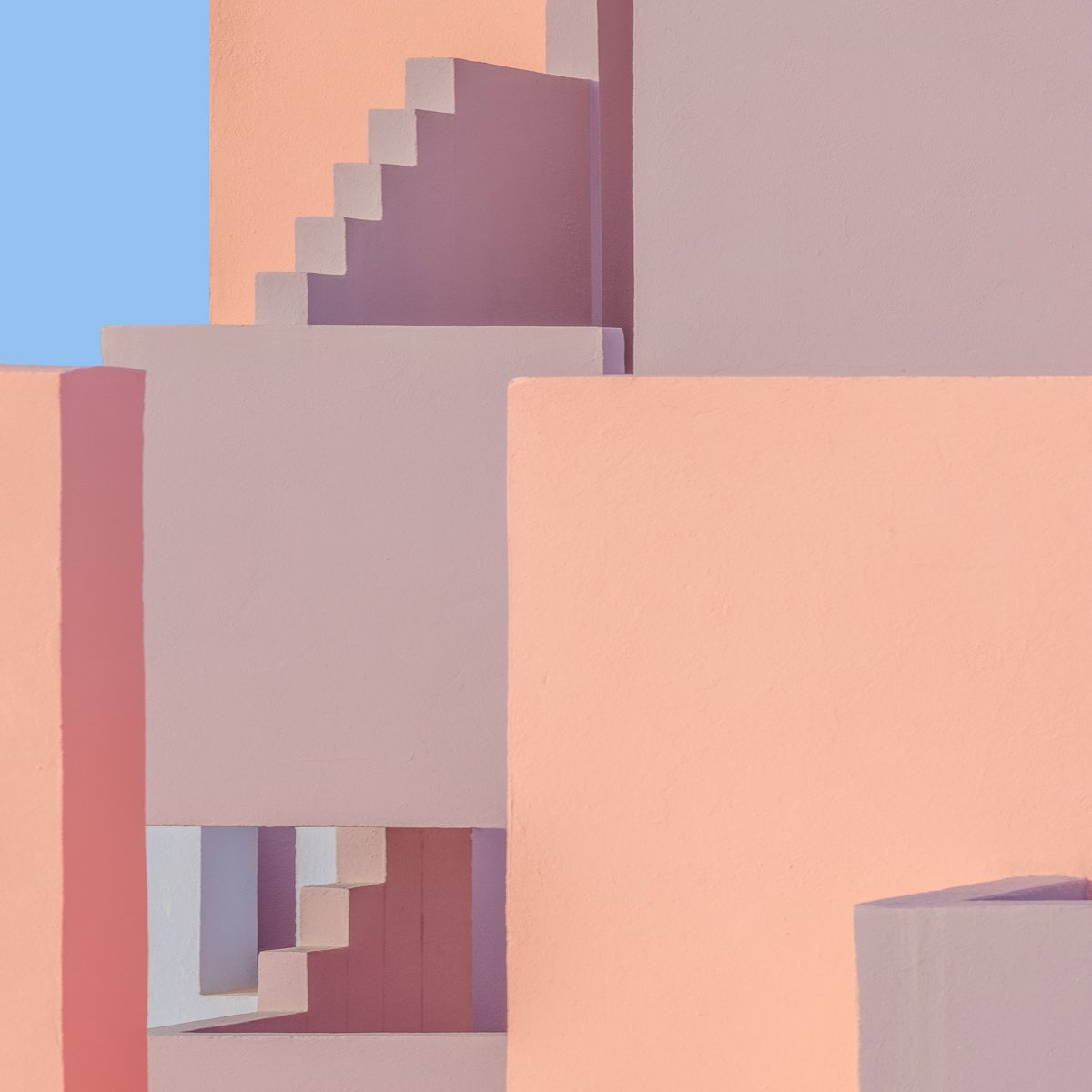
Today, I want to share an aspect of photography that I’m truly passionate about—one that not only fuels my creativity but also invites a fresh perspective on the world around us: minimalist architectural photography. My hope is that this article inspires you to venture out and capture something similar.
Minimalist architectural photography allows us to strip away distractions and visual noise, drawing attention to the elegance of clean lines, expansive spaces, and pure simplicity.
However, finding simplicity within the complexity of architectural design isn’t always straightforward. Over the years, as a photographer I’ve learned that the key lies in focusing on the essential, eliminating excess, and letting the structure speak for itself.
In this article, I’ll guide you through the process of capturing minimalist architecture and show you how to uncover simplicity even within the most intricate designs.
What is Minimalist Architecture Photography?
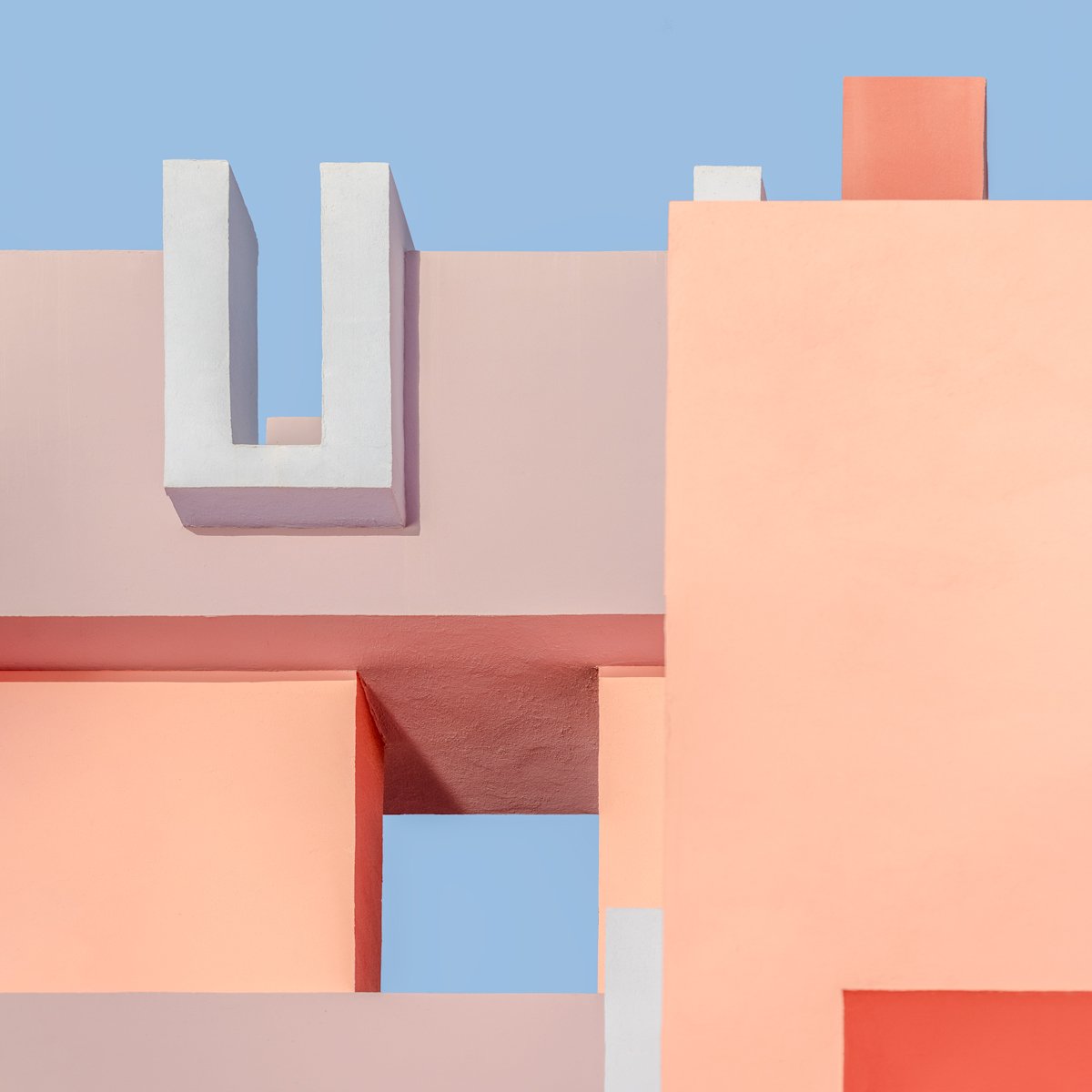
Minimalist architectural photography is about capturing the essence of a building or space in its purest form. It focuses on distilling the scene to its most fundamental elements while preserving its structure, elegance, and function. This often means emphasizing geometry, light, and shadows while eliminating distractions that might take away from the building’s inherent beauty.
Simplicity is at the heart of minimalist photography. When photographing architecture, this translates to thoughtful composition—highlighting clean lines, symmetry, and negative space to allow the subject to breathe. The result is often a serene, almost meditative image that draws the viewer’s attention directly to the architecture itself.
Finding Simplicity in Complexity: What to Look for
Architectural spaces are often busy, filled with intricate details and visual distractions. As a minimalist photographer, the challenge is to strip away this complexity while preserving the essence of the structure. Here are a few key approaches to achieving simplicity in complex architectural settings:
1. Simplify Your Frame
Minimize unnecessary elements in your shot. In bustling cityscapes, distractions like signs, cars, and people can take away from the minimalist focus of your composition. Instead, look for angles or vantage points that isolate the building, removing clutter and emphasising its form.
Negative space—the open area around and between your subject—is just as important as the architecture itself. By allowing the building to ‘breathe’ within its environment, you create a sense of balance and calm. This approach enhances visual clarity and draws the viewer’s attention directly to the structure.
2. Focus on Geometry and Symmetry
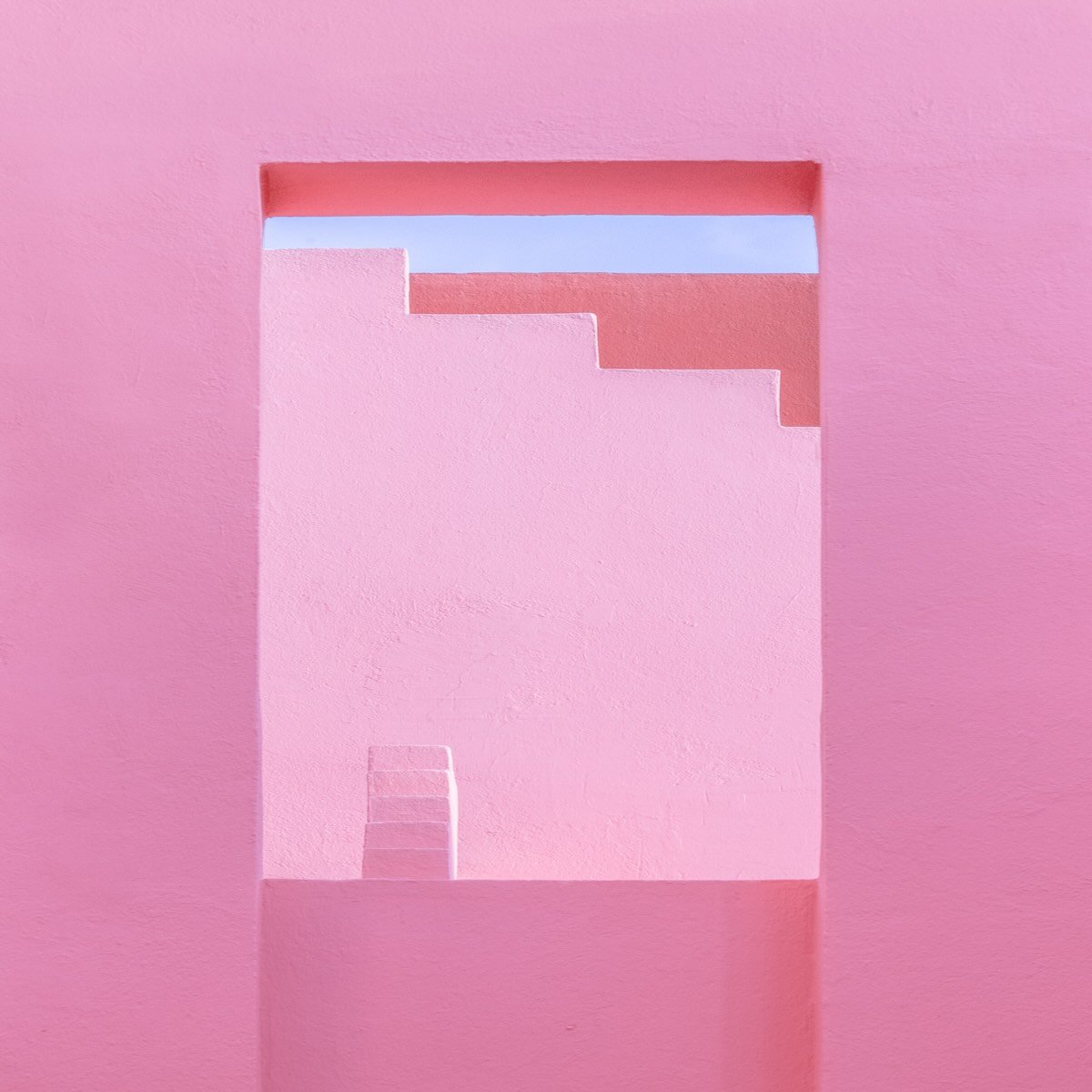
Architecture is rich with clean lines, geometric shapes, and symmetrical designs—elements that lend themselves perfectly to minimalist photography. Whether it’s the sharp angles of a modern office building, the curves of a museum, or the rhythmic repetition of windows, these features provide endless opportunities for striking compositions.
When you spot symmetry or an intriguing geometric pattern, center your frame around it. By doing so, you can transform a complex structure into a simple yet powerful visual statement.
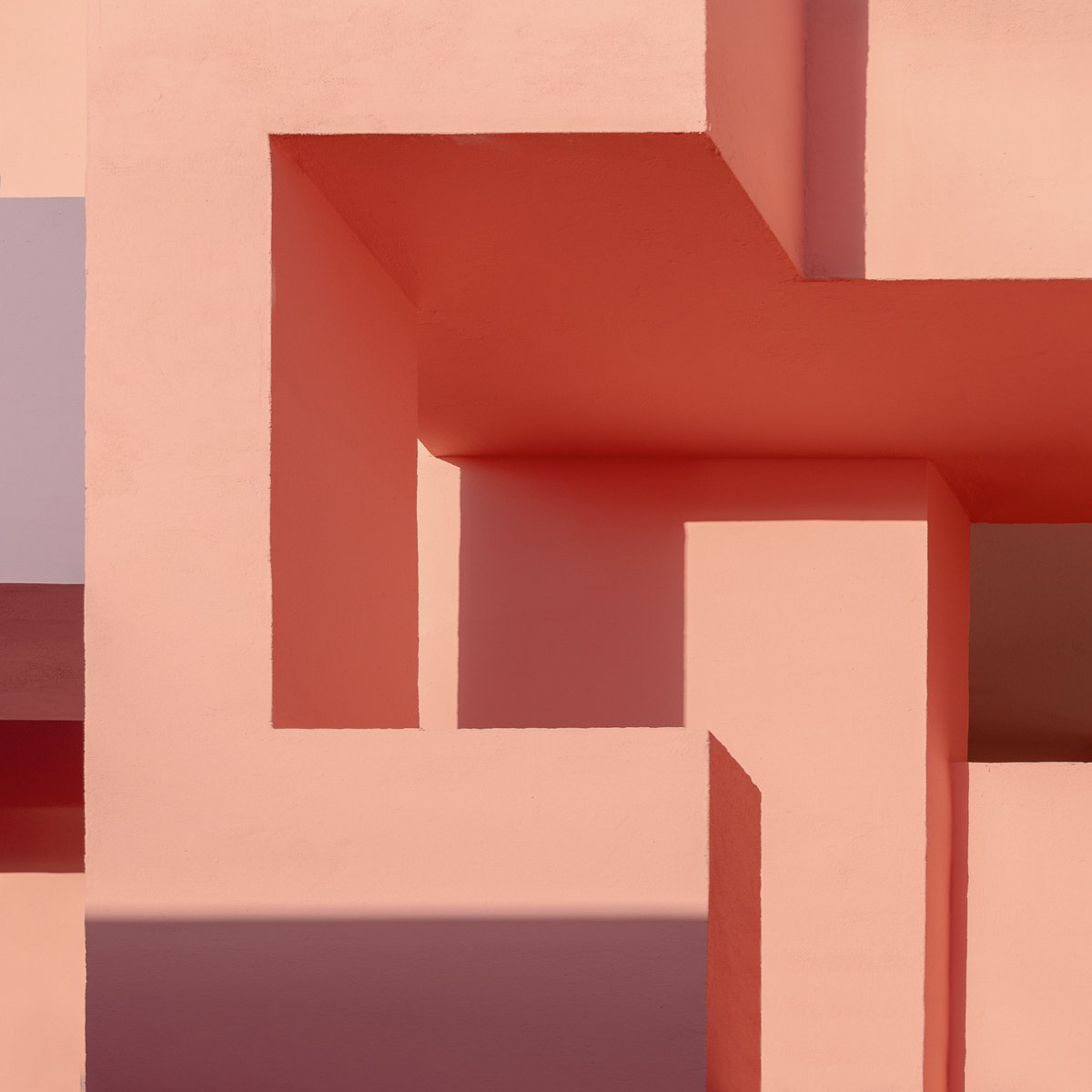
3. Play with Light and Shadows
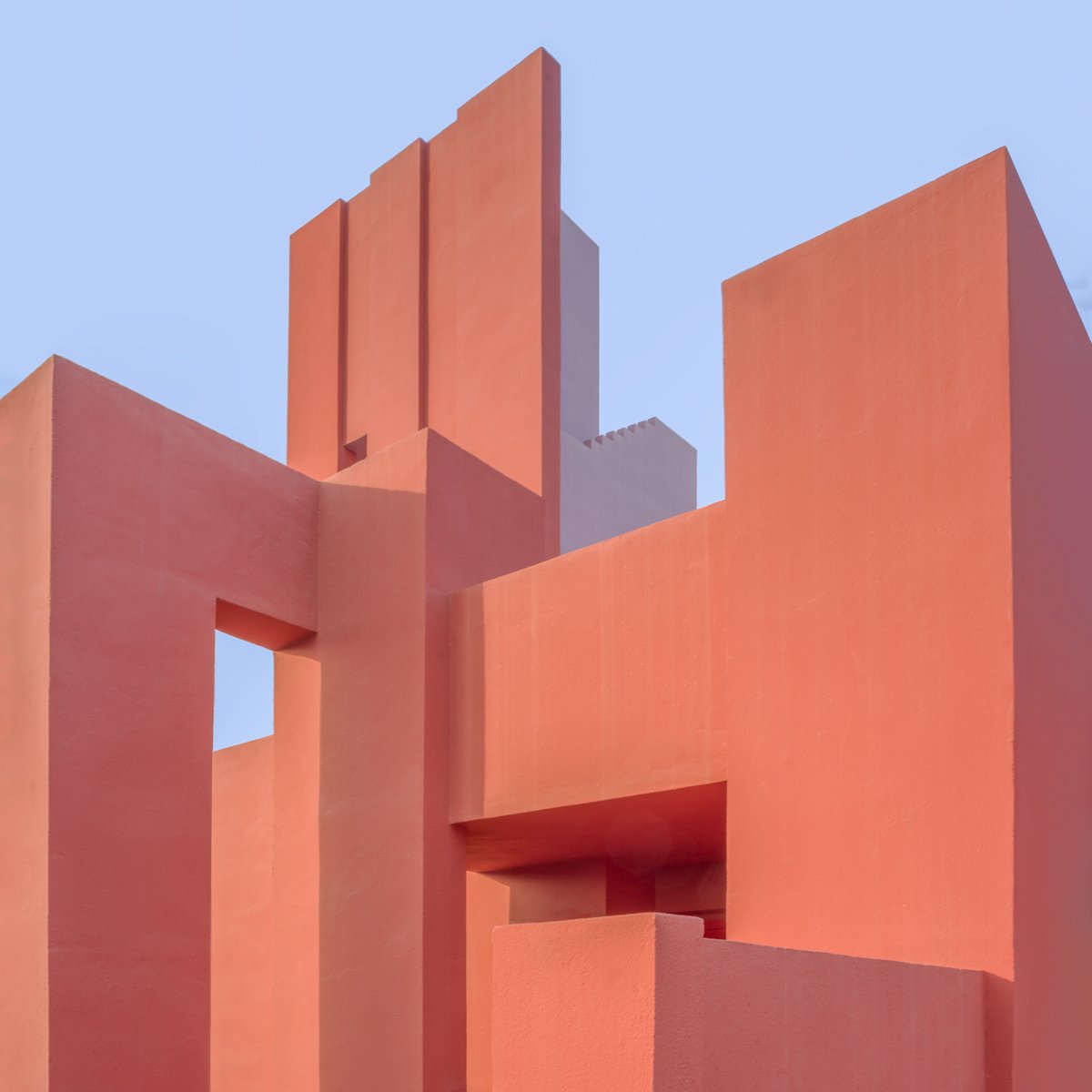
Light is a key element in minimalist architectural photography. Harsh lighting can cast deep shadows that emphasize a building’s clean lines, while soft, diffused light reveals subtle textures and curves.
The time of day greatly impacts your composition. Early morning and late afternoon provide soft, natural light that enhances architectural details without overpowering the scene. Midday, with its strong contrasts, can create bold, geometric patterns when light interacts with the structure at just the right angles. Understanding and experimenting with these lighting conditions can help you craft more striking and dynamic minimalist images.
4. Focus on Detail
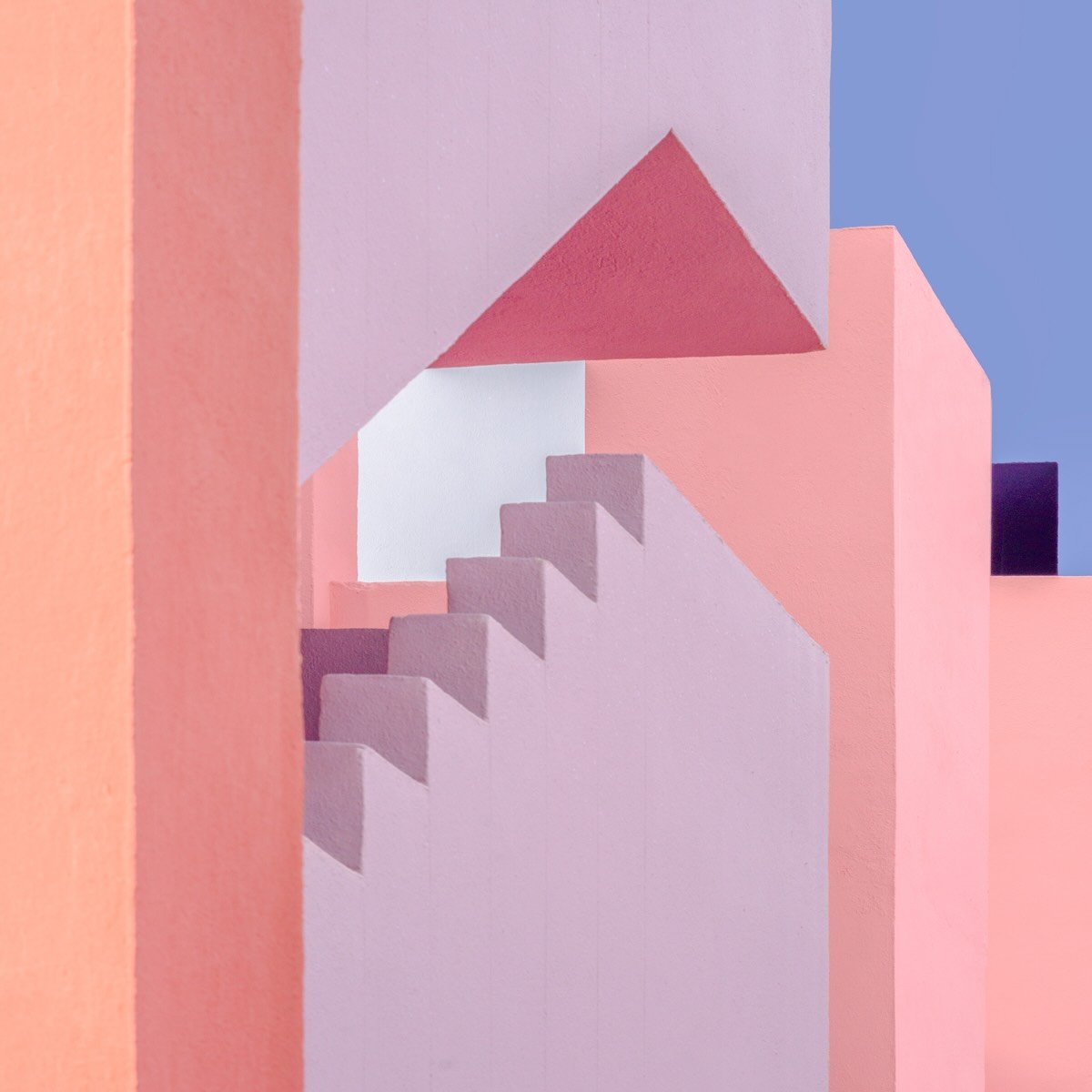
Minimalist architecture isn’t just about grand structures—it’s often the smaller details that create the most compelling images. The texture of a wall, the curve of a staircase, or the way light interacts with a surface can all become powerful focal points.
Don’t be afraid to zoom in and isolate a specific element that speaks to you, rather than capturing the entire building. By highlighting these often-overlooked details, you can create striking minimalist compositions that showcase the essence of the architecture in a unique way.
5. Experiment with Black and White
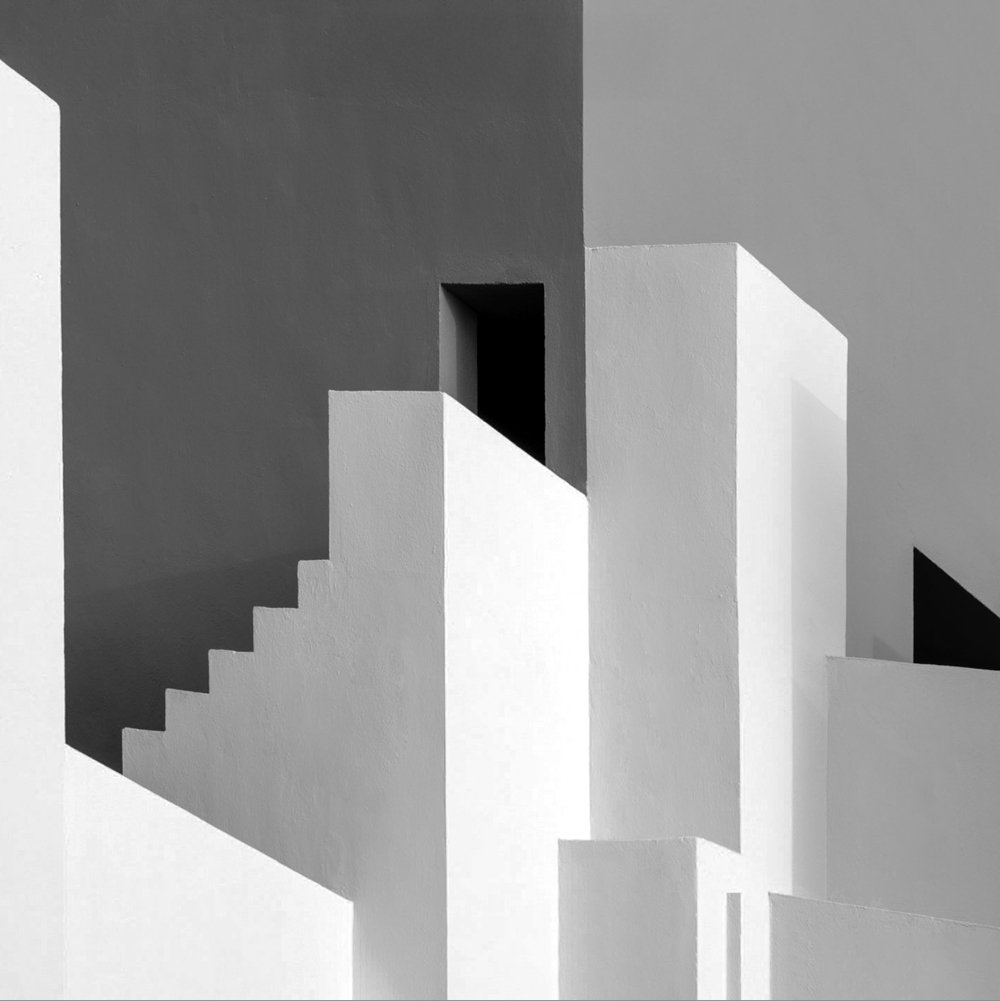
While colour can add mood and context to a photograph, black and white photography enhances minimalism by emphasising shapes, textures, and contrasts. By stripping away color, the focus shifts entirely to the architectural form, allowing lines, patterns, and shadows to take center stage.
Converting your images to black and white can also remove visual distractions, creating a timeless and powerful composition that highlights the essence of the structure. Don’t be afraid to experiment—you may find that monochrome brings out details and depth that colour might otherwise overshadow.
Minimalist Architecture in Urban Spaces
Urban environments are a goldmine for minimalist architectural photography. However, photographing modern cities with their sleek, glass buildings, intricate designs, and imposing structures can sometimes present a challenge. The trick is to find the clean lines, open spaces, and symmetrical shapes that emerge from the chaos of city life. This is where patience comes in.
Sometimes, it’s about waiting for the right moment when a building stands alone against the sky, or when crowds thin out, and the structure takes centre stage. Be mindful of the way the light plays across the building throughout the day, and how you can leverage it to create striking contrasts or subtle shadows.
Conclusion: The Beauty of Simplicity
Urban environments are a treasure trove for minimalist architectural photography. However, capturing modern cities—with their sleek glass facades, intricate designs, and towering structures—can be challenging. The key is to seek out clean lines, open spaces, and symmetrical forms that emerge from the surrounding chaos. This requires patience and a keen eye.
Sometimes, it’s about waiting for the perfect moment—when a building stands alone against the sky or when a busy street momentarily clears, allowing the structure to take center stage. Pay attention to how light interacts with the architecture throughout the day, using it to create bold contrasts or delicate shadows that enhance the minimalist composition.
If you’re inspired by minimalist architecture photography and want to see more of my work, please do check out my instagram @antonyzphoto or my art website at antonyzacharias.com or of course my main teaching website antonyz.com
Or, if you’re ready to capture your own minimalist images – whether with an architectural focus or other subject – please reach out by email antony@antonyz.com (or click here) and and we can arrange a in person session.
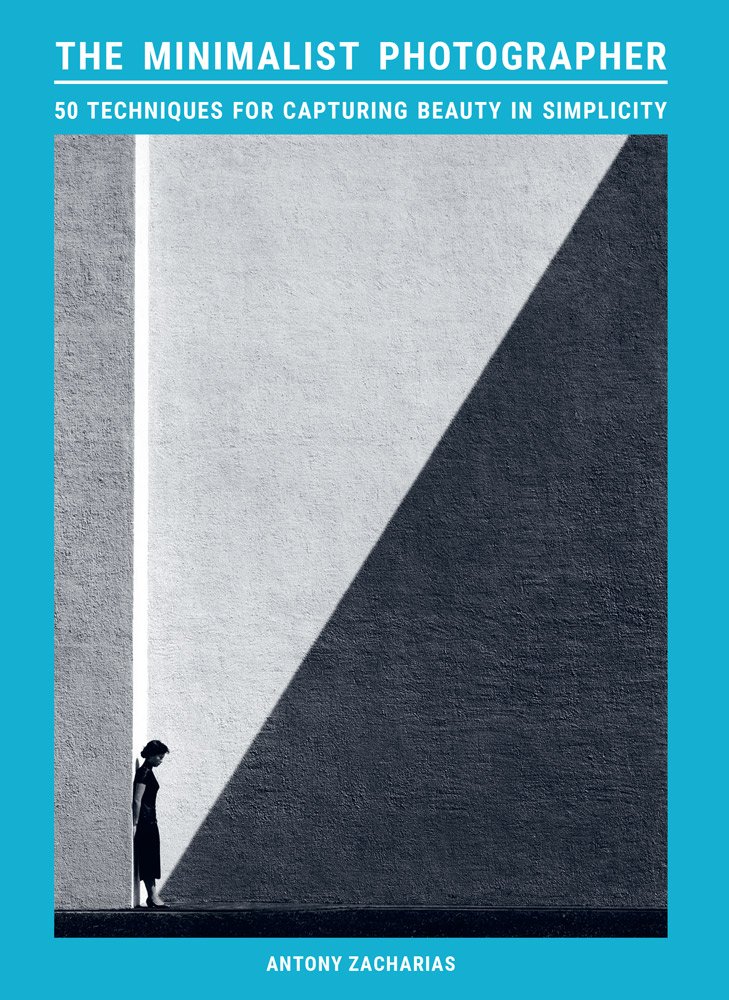
| I’d also like to mention that I am proud and delighted to have finished my latest book and first with Laurence King – The Minimalist Photographer. With advice on composition, balance, shape and texture, this book takes inspiration from the masters of minimalism to demonstrate how stripping a subject down to its very essence can help you craft beautifully bold and unique images. Illustrated with the finest examples of the style from the likes of Fan Ho, Imogen Cunningham, Michael Kenna, Berenice Abbott, William Eggleston and Horst P. Horst, this book guides you through the key techniques that define minimalism and provides easy-to-follow advice for how to create your own minimalist images that are visually striking in their simplicity. It is available in June 2025 and you can read more about it and preorder here: https://www.laurenceking.com/products/the-minimalist-photographer or on Amazon UK or Amazon USA |
In the meantime – I hope you found this useful and of course – do let me know if there are any specific topics that you would like me to discuss in the future newsletters and of course I wanted to thank you all for your continued support and interest in my work.
I am a commercial and fine art photographer specialising in architecture, long exposure and minimalism. I am the author of 5 photography books, a speaker and regularly teach a range of students from small groups to individuals at all photography skill-levels. Please click below to get in touch or to see more of my work.


