
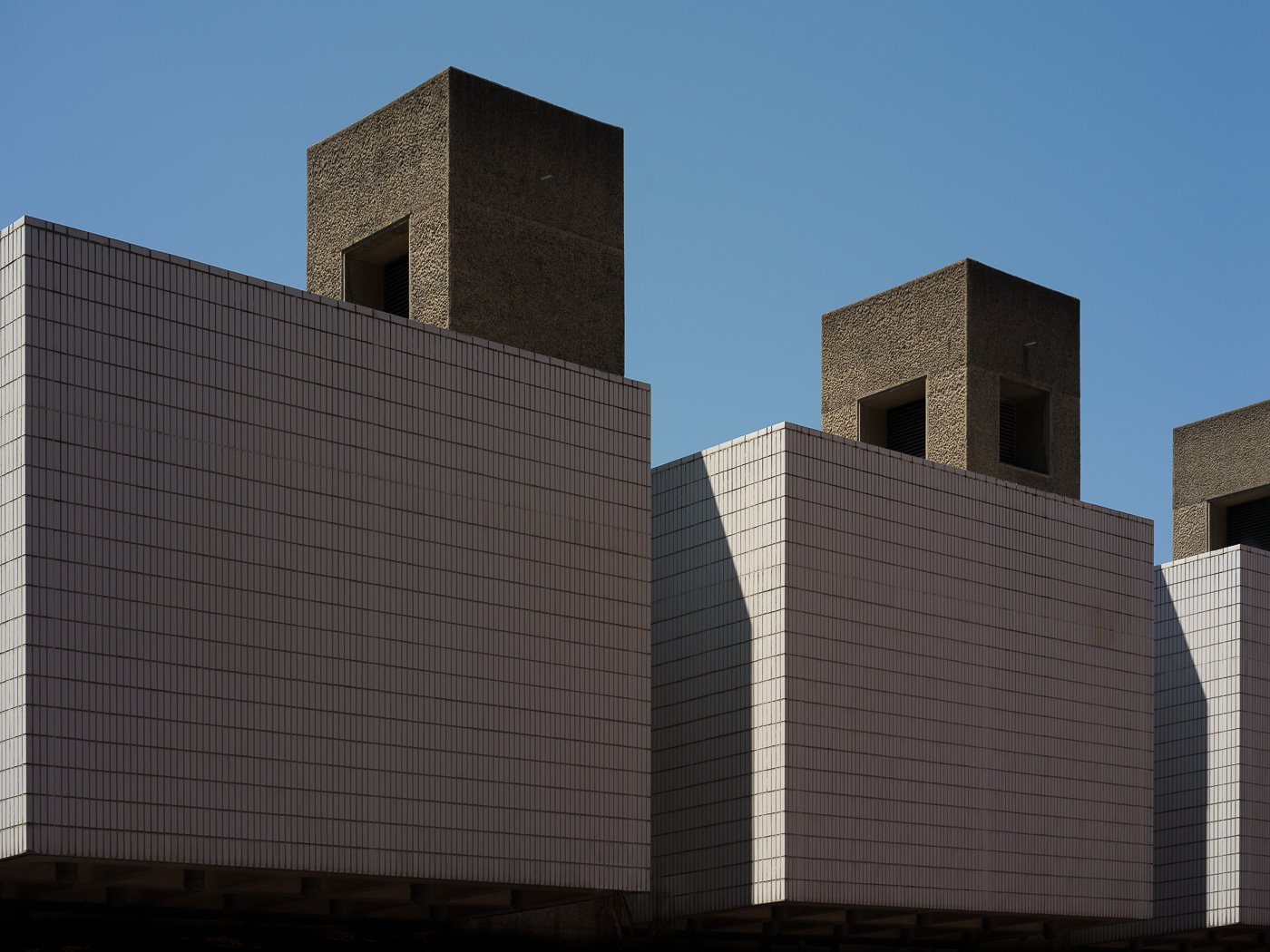
When I teach architectural photography, I am less interested in how many landmarks we visit than in how many ways we can see one place. Moving constantly between locations can feel productive, but it often results in a sequence of first impressions. Staying longer forces us to look past those first impressions.
The Barbican is particularly well suited to this exercise: repeating balconies, textured concrete, walkways, water and abrupt changes of scale. Instead of treating these as things to collect, treat each one as a compositional possibility. You are not trying to make ten similar images of Brutalist architecture. You are trying to make ten photographs with different visual purposes.
Before you begin: choose your constraints
Give yourself approximately ninety minutes in an area you are permitted to photograph. Bring one camera and, ideally, one zoom lens. Leave yourself enough flexibility to change framing, but do not make changing equipment the main activity.
For each photograph, write down the idea in five or six words before you press the shutter. This tiny interruption makes you distinguish a genuine new picture from another minor adjustment to the last one.
Ten photographs from one place
1. Establish the whole space
Make one photograph in which the viewer understands the scale and relationship of the main structures. Resist the urge to tidy away every trace of context. The question is what must remain for the scene to make architectural sense.
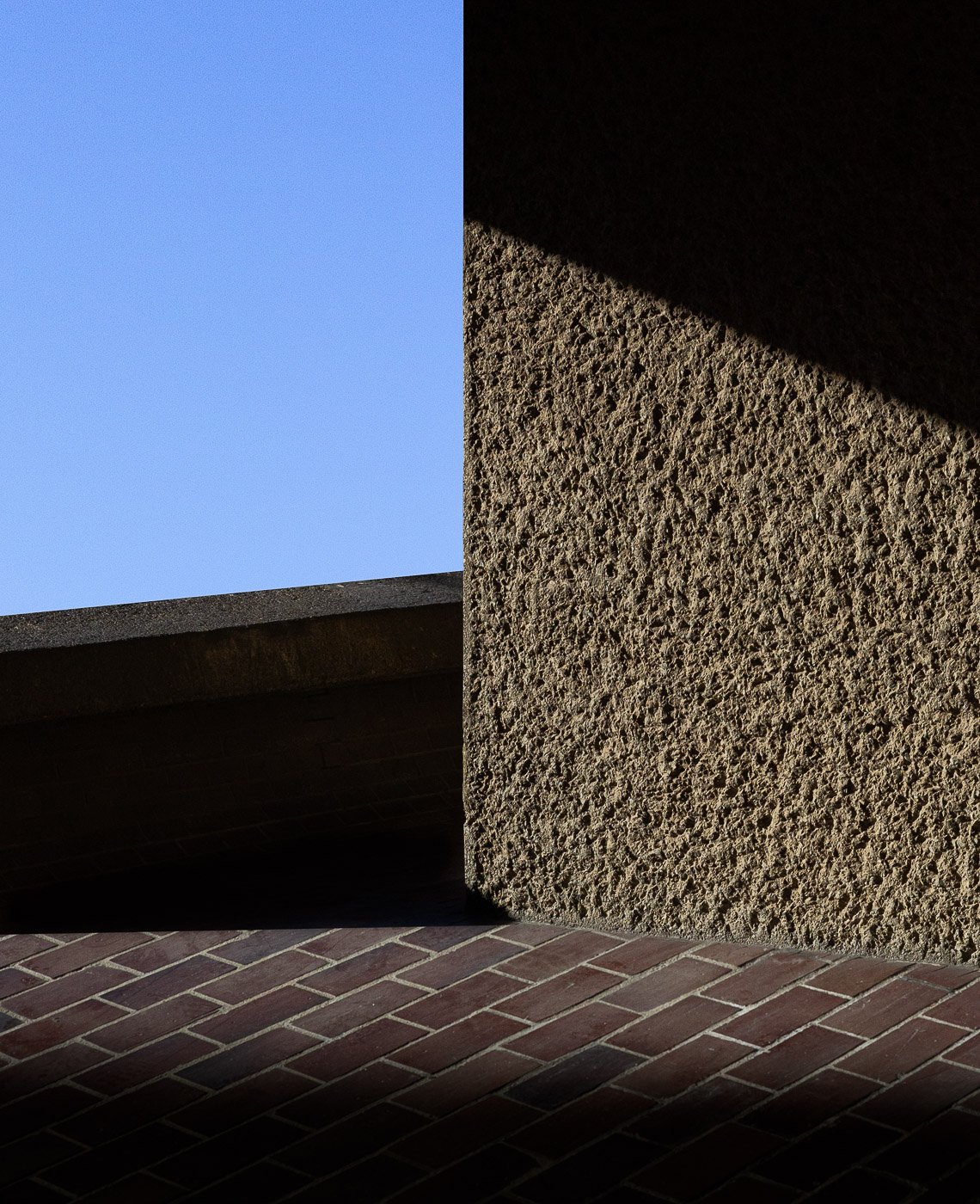
2. Remove almost everything
Now do the opposite. Choose a concrete plane, an edge and perhaps a sliver of sky. Use negative space and careful framing to create a picture that could almost be a diagram. If nothing in the photograph has visual tension, you may have simplified it too far.
3. Make rhythm the subject
Find a repeated architectural feature: balconies, windows, railings or columns. Examine the spacing. A strong rhythm usually needs a decision about where it starts, stops or is interrupted.
4. Photograph the interruption
Stay with the same repetition but look for an exception: a shadow, a plant, a window, a person or a shift in light. The repeated structure now provides the rule against which the interruption becomes noticeable.
5. Work with a single person
Rather than photographing someone simply walking past a building, wait for their position, scale and direction to matter within the architecture. Think about what the figure gives the frame: proportion, tension, isolation or movement.
6. Build a layered composition
Find a foreground, middle distance and background that all contribute. A railing may lead to a walkway, which in turn intersects a tower. Move laterally until those layers relate. More information should create structure rather than clutter.

7. Make colour do the work
The Barbican is associated with grey concrete, but look for restrained colour relationships: planting, painted details, reflections or clothing. Allow one colour to carry visual weight. Avoid adding colour simply because the image otherwise feels subdued.
8. Make a shadow photograph
When directional sunlight is available, ignore the building's identity and photograph what the light is drawing across it. If the sky is overcast, adapt the assignment to tonal differences and texture rather than forcing a high-contrast result.
9. Turn your camera around
At a promising viewpoint, photographers often keep refining the same direction. Look behind and beside you. The strongest photograph may not be the view that originally attracted you.
10. Make a deliberately complex image
Finish by moving towards visual density. Bring together several forms, rhythms or spatial layers without losing control of the frame. This is not the opposite of discipline: a complex photograph needs an underlying order just as much as a simple one.
Now edit the ten as a set
Do not judge the exercise by whether every frame is excellent. Ask whether the photographs demonstrate different ideas. If the first six all rely on isolated geometric details, you may be repeating a familiar solution rather than discovering new ones.
Choose the three that make the clearest independent statements. Then identify what is missing. You may discover that the best next photograph needs a person, a more complex relationship or simply a return in different light.
Photography and access: the Barbican Centre publishes guidance for small-scale photography in specified public spaces. Its public guidance distinguishes the Centre from the wider residential estate and limits equipment, group size and prominent members of the public for small-scale shoots. Check the current rules before photographing, particularly with a tripod or when teaching in a group; respect residents' privacy.
Put this way of seeing into practice
A private architecture session can stay with one London location long enough to work through these approaches, make photographs, compare them and understand which decisions were strongest.