
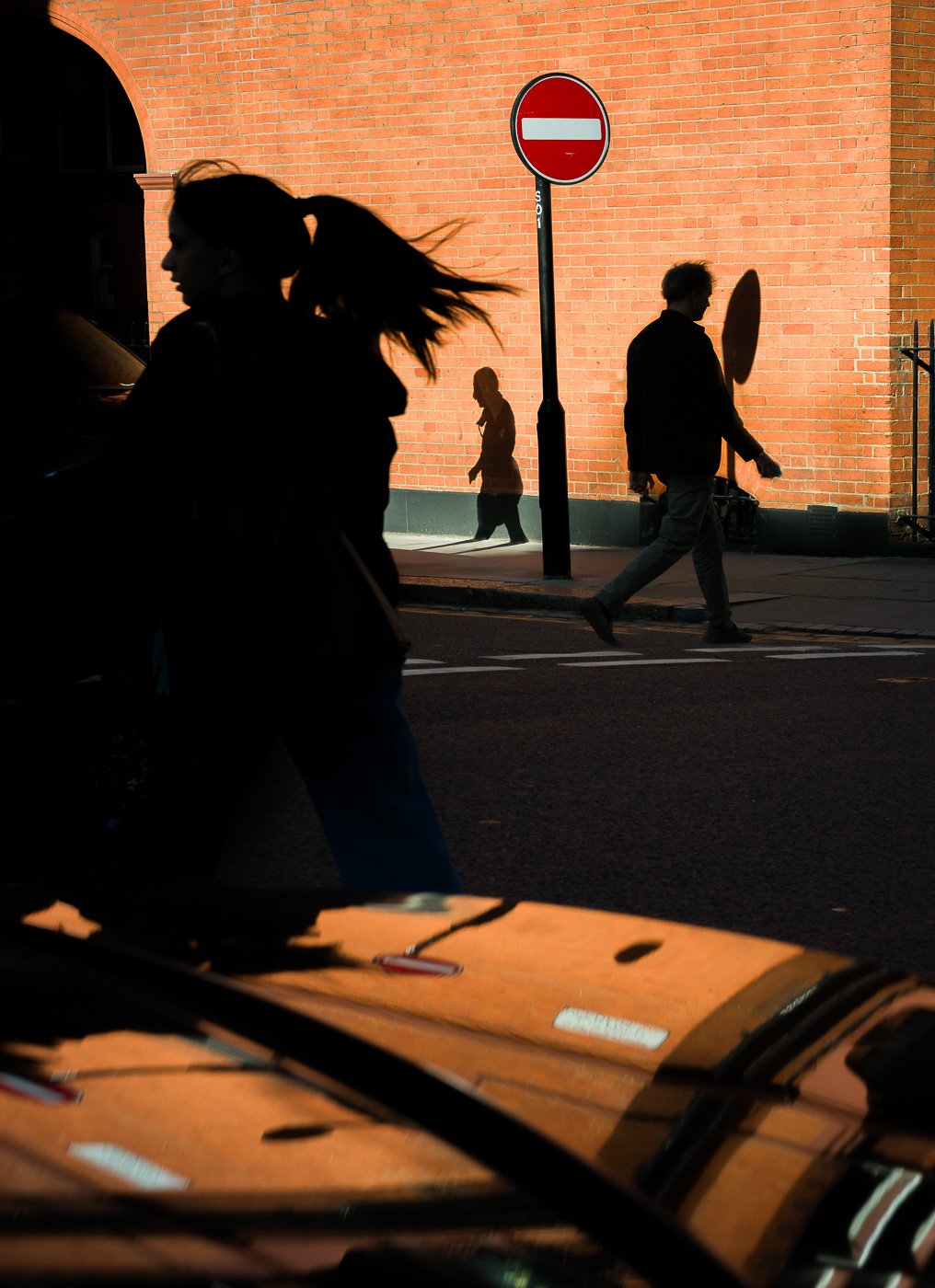
London is full of possible street photographs, but it is also full of distraction. Pedestrians, buses, signs, windows and reflections compete for attention. Reacting to everything usually produces a large quantity of images with little hierarchy.
My background is in architectural photography, so I often begin with a structure and allow people to change its meaning. Instead of chasing an individual from one scene to another, I sometimes find a place with interesting geometry, settle on a framing and watch what passes through it.
Find the stage before you wait for the actor
A doorway, repeating window, colonnade or strip of light can establish the photograph before any person arrives. Ask what kind of human presence might make the arrangement more interesting. Would a lone figure provide scale? Would two people moving in opposite directions produce tension? Would an empty frame be stronger?
That last question matters. Not every street photograph needs a person; sometimes the expectation of human activity is enough.
Four useful areas for different kinds of London street photography
The City: pattern, pace and formal architecture
Around Bank, St Paul's and neighbouring streets, formal façades and repeated architectural features can impose order on the movement of office workers and other pedestrians. Rather than making a general photograph of a crowd, look for a particular relationship between bodies, clothing, direction and a fixed background.
South Bank: layers and varied rhythms
Riverside paths, open views, cultural buildings and frequent changes in footfall allow you to move between intimate gestures and wider urban arrangements. Watch how foreground figures can temporarily frame or conceal the larger scene.
Soho: edges, colour and small gestures
Narrower streets, shopfronts and intersecting routes can produce strong scenes through colour, signage and split-second relationships. Work carefully with the frame edges. One distracting sign or half-included figure can undermine an otherwise promising image.
Canary Wharf: order and reflective surfaces
Glass, repeated façades and broad managed spaces create different opportunities. Here, reflection and scale can be as important as a decisive gesture. Be aware that much of the estate is privately managed and photography rules depend on the nature of your shoot.
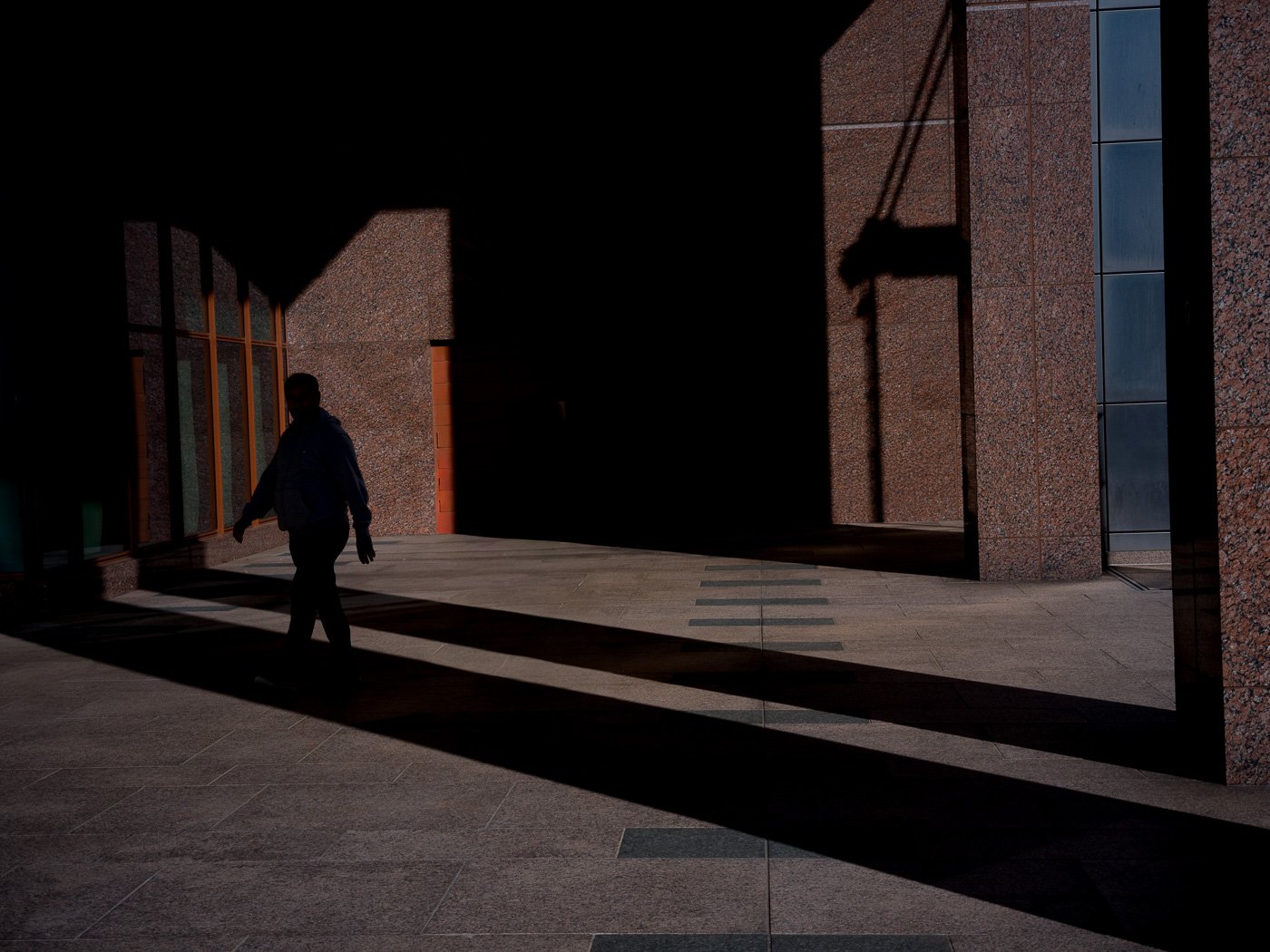
Six compositional exercises
1. One fixed frame, five different relationships
Choose a composition and do not move for ten minutes. Rather than firing continuously, look for five genuinely different ways people inhabit it: isolation, counterflow, pairs, overlap and absence. This is a way to practise anticipation and selection, not a reason to manufacture a particular encounter.
2. Foreground and background
Find two planes that each contribute to the photograph. Wait for their relationship to become clear. A nearby figure does not add depth merely by being close; they need to interact visually with what sits behind them.
3. Counterflow
Watch a place where people move in opposing directions. Timing matters, but so does spacing. Too many overlapping bodies turn directional tension into an unreadable crowd.
4. A colour relationship
Find a colour already present in the architecture or signage and wait for a complementary, contrasting or repeated colour in the passing scene. The relationship should be meaningful enough that removing one part would weaken the picture.
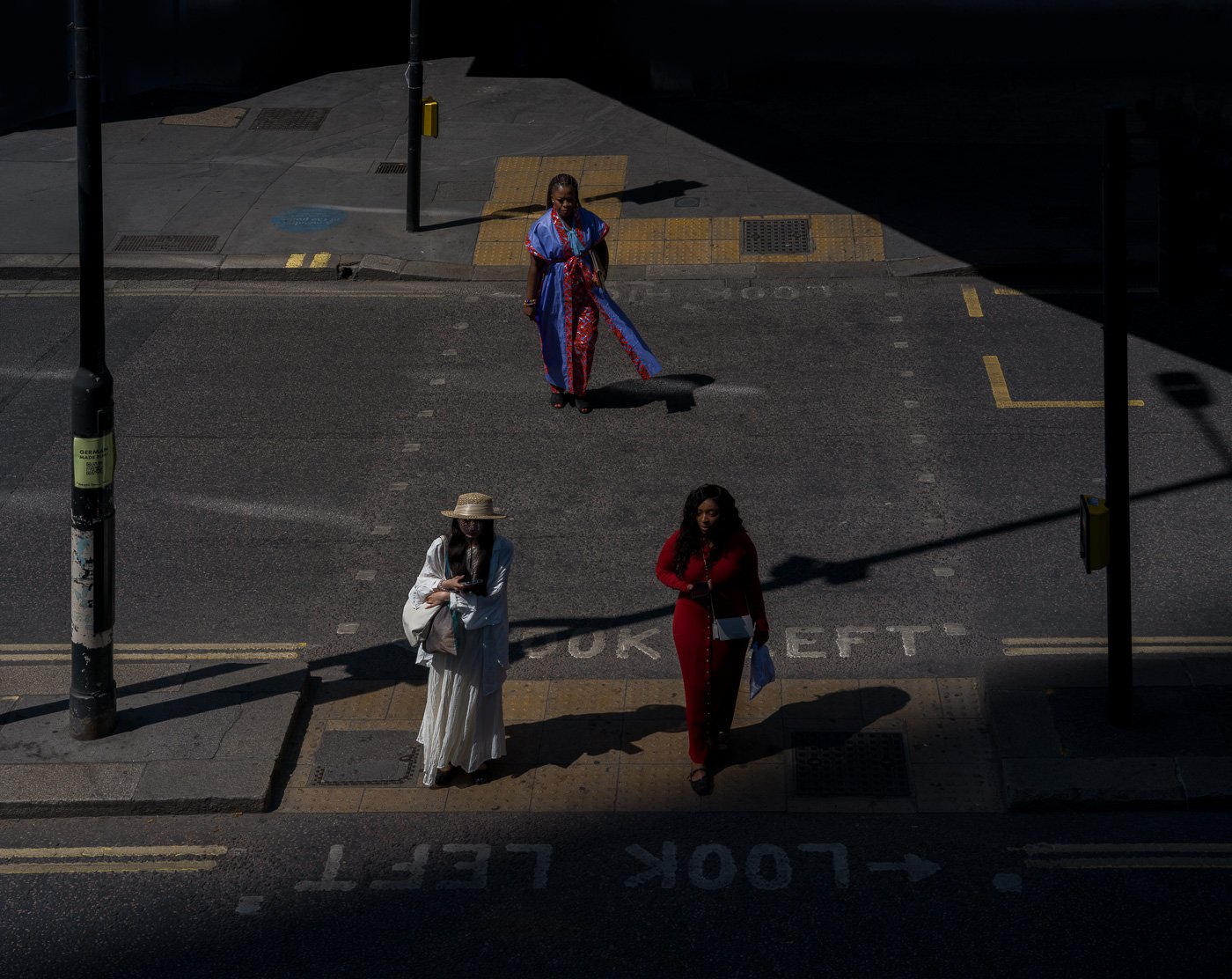
5. The significant absence
Photograph the same scene with and without people. Compare the results. If the empty version is stronger, accept it. Street and urban photography are not competitions to fill every frame.
6. Select rather than accumulate
At the end of your walk, choose no more than five photographs. For each, explain what carries the image. If the answer is simply that something interesting happened, look again at how the moment was composed.
Camera settings should support anticipation
You do not need an elaborate setup. Prioritise a shutter speed appropriate to subject movement, reliable focus and an aperture that suits the depth you want. A wide aperture can isolate a subject, but stopping down may make a layered scene easier to read. The point is to reduce decisions about the camera once the moment starts to unfold.
If you are exploring intentional motion blur, slower shutter speeds can give gesture and movement another role. Start with a clear static anchor; otherwise blur can become a substitute for composition. My London long exposure guide covers the wider technique.
Photographing people responsibly
Public-space photography calls for judgement as well as an understanding of applicable rules. Avoid intrusive behaviour, treat requests and concerns respectfully, and be particularly careful around children, private spaces and vulnerable subjects. Publication, commercial use, privately managed land and organised shoots can raise additional considerations.
For formal shoots in the Square Mile, consult the City of London's current photography guidance. Different estates and locations may have separate policies.
Develop your urban photography with individual feedback
Private tuition can concentrate on composition, camera control and the practical decisions you make while photographing the city. For photographers developing a longer urban project, mentoring can focus on image selection and coherence.